Brand Strategy · 8 min read
How to Benchmark Drinks Brand Competitors Without Copying Them
A benchmark is not a moodboard. Learn how to study competing drinks brands for strategic gaps in positioning, packaging, pricing, audience, and channel.
The short answer: benchmark competitors to understand the rules of the category, then decide which rule you can credibly reinterpret. Copying the surface of a successful bottle creates a weaker version of the original. Studying its commercial logic creates a better decision for your own brand.
Build a useful benchmark setChoose five to eight brands, not fifty. Include direct competitors — products that share your category, price range, and customer occasion — alongside adjacent brands that solve the same emotional or social job differently. A premium 0% aperitif might benchmark an adult soft drink, an imported amaro, a design-led sparkling water, and a non-alcoholic wine. A new rum may benchmark a contemporary tequila or a high-design whisky if those products compete for the same bar-back or gift occasion.
The aim is to understand the customer’s real choice set rather than to produce a long list of brand names.
Study five dimensions, not just the logoFor each brand, capture the product proposition, the customer and occasion, the price and pack architecture, the visual identity, and the route to market. Product proposition means more than flavour: what is the promise, proof, origin, format, and reason to choose it? Customer and occasion identify who is buying, when, and in what social setting. Price and pack show what the brand believes it is worth. Visual identity reveals the brand’s category cues and distinctive assets. Route to market shows where the promise is made real.
This can be a simple table. The value comes from being specific enough that two founders would reach the same conclusion after looking at it.
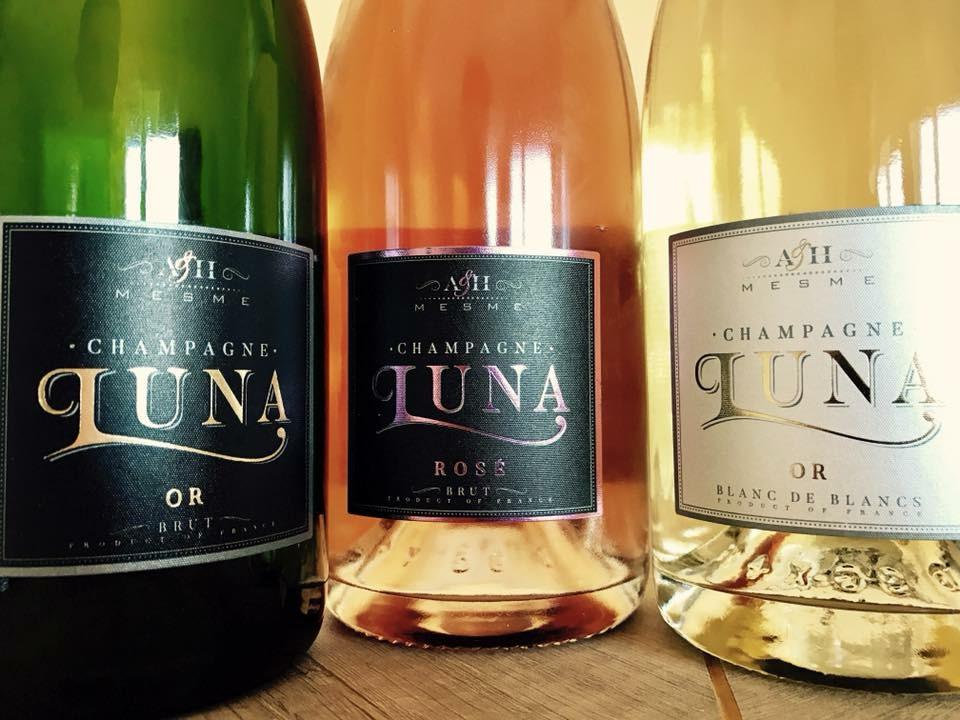
Separate category codes from distinctive assetsEvery category has codes: champagne may use metallic cues, provenance language, and celebratory imagery; whisky may use dark palettes, age cues, and tactile labels; contemporary 0% brands may use botanical illustration or ritual-led language. Codes help consumers understand what they are seeing. Distinctive assets help them remember whose product it is.
Your job is not to abandon category codes entirely. If the customer cannot recognize the product type, trial becomes harder. Your job is to choose one or two assets you can own consistently: a name structure, bottle silhouette, colour field, emblem, graphic rhythm, service ritual, or particular language style.
Look for a credible whitespaceWhitespace is not simply an empty visual space. It is an unmet or under-served combination of consumer, occasion, proof, and expression. You may see that a category speaks only to connoisseurs when a newer audience wants a more social invitation. You may see that premium brands look interchangeable at shelf distance. You may see a product group that lacks a credible bridge between hospitality and retail.
The key word is credible. A gap is only useful if your product, founder story, production route, price, and launch access can support it. A clever position that cannot be delivered is not a strategy.
Benchmark the shelf and the conversationDo not study brands only online. Visit relevant stores, bars, restaurants, and hotel venues. Record what sits nearby, how staff describe the product, which formats dominate, how packages look in their real environment, and where the price is visible. Ask what the buyer needs to know before they recommend a new product. This is where a theoretical brand begins to become a sellable one.
Turn research into a decisionEnd your benchmark with a one-page conclusion: the category rule you will respect, the customer tension you will solve, the visual and verbal territory you will own, and the three things you will deliberately not do. The last part is important. A clear “no” protects the brand when more ideas arrive.
The Brand Atelier uses competitive benchmarking at the beginning of a build, before final identity and packaging are locked. It gives the founder a sharper brief and gives the creative team a reason to design with intent rather than imitation.
Published 2026-07-16 — The Brand Atelier