Champagne Brands · 9 min read
How to Create Your Own Champagne Brand: The Complete Guide
From sourcing Champagne AOC grapes to label design, compliance, and distribution — the definitive guide to launching a premium champagne brand.
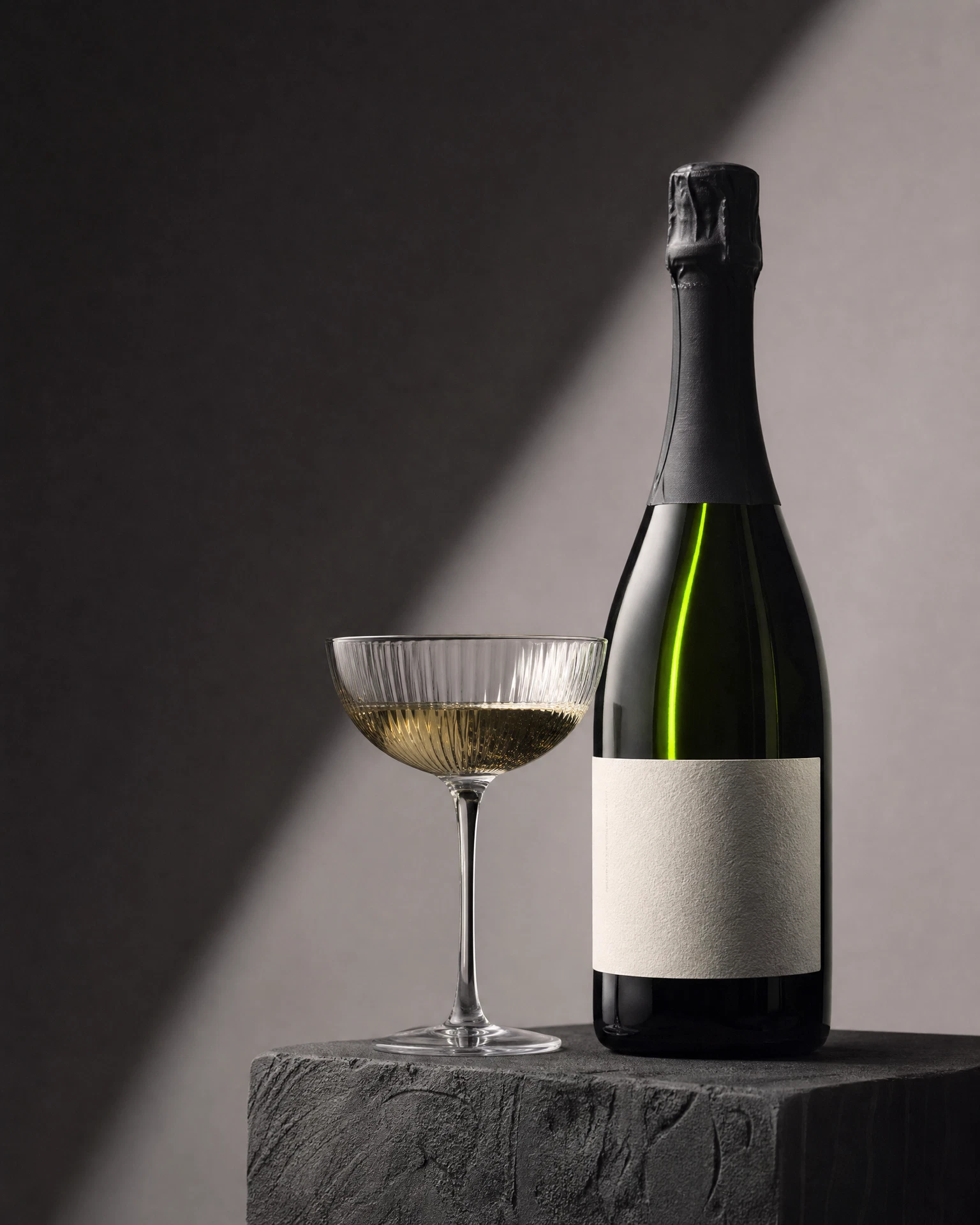
Champagne is the most prestigious beverage category in the world. A bottle of Champagne is not just a drink — it is a symbol of celebration, success, and luxury. For brand builders, this creates a unique opportunity: the Champagne category commands premium pricing, enjoys global recognition, and carries an emotional resonance that no other drink can match. But creating a Champagne brand requires navigating one of the most tightly regulated appellations in the world. This guide walks you through every step.
Understanding the Champagne AppellationChampagne can only be produced in the Champagne region of northeastern France, from a strictly defined set of grape varieties — primarily Chardonnay, Pinot Noir, and Pinot Meunier. The appellation is governed by the CIVC (Comité Champagne), which enforces rules on everything from grape sourcing and yields to production methods and labelling. This is not a restriction — it is a guarantee of quality and authenticity that justifies the premium price point.
For brand builders, there are two primary routes into the Champagne category. The first is as a Négociant-Manipulant (NM): you purchase grapes or base wines from growers and produce your own Champagne under your brand. This is the model used by the great Champagne houses — Moët, Veuve Clicquot, Laurent-Perrier. The second is as a Buyer's Own Brand (BOB): you work with an established Champagne house or cooperative to produce a Champagne under your brand name, without owning production facilities. For new brands, the BOB route is the most practical and cost-effective starting point.
Defining Your Champagne Brand ConceptBefore sourcing a single bottle, you need a clear brand concept. The Champagne market is crowded at the mass-market level but wide open at the premium and ultra-premium tiers. The most successful new Champagne brands are built around a specific story, aesthetic, or consumer occasion. Ask yourself: Who is your consumer? What occasion does your Champagne serve? What visual world does your brand inhabit? What is your point of difference from the established houses?
Some of the most successful recent Champagne brand launches have been built around: a founder's personal story (Champagne Luna, created as a tribute to the founders' daughter); a specific aesthetic or lifestyle territory (rosé Champagnes positioned around the French Riviera); or a specific consumer segment (Champagnes designed for the Asian luxury market, like Sérac).
Sourcing Your ChampagneFor a BOB brand, you will work with a Champagne house or cooperative to create your cuvée. Key decisions include: the style of Champagne (Brut, Extra Brut, Blanc de Blancs, Blanc de Noirs, Rosé, Vintage); the blend composition (percentage of Chardonnay, Pinot Noir, Pinot Meunier); the dosage (residual sugar level, which determines the style from Brut Nature to Demi-Sec); and the ageing period (non-vintage Champagne must be aged a minimum of 15 months; vintage a minimum of 36 months).
Minimum order quantities for BOB Champagne typically start at 3,000–6,000 bottles. Pricing at source ranges from €12–25 per bottle depending on quality tier and producer. For a premium brand, budget €18–25 per bottle at source.
Building Your Champagne Brand IdentityThe label is everything in Champagne. Consumers make purchasing decisions based on the bottle and label before they ever taste the wine. Your brand identity must communicate luxury, authenticity, and distinctiveness at a glance. Key elements include: brand name (must be legally available in all target markets — conduct a thorough trademark search); label design (invest in a world-class designer — budget €5,000–15,000 for label design alone); bottle shape and colour (standard Champagne bottle or a distinctive proprietary shape); capsule and cage design; and brand story communicated on the back label.
Champagne Luna's success was built in part on its distinctive label design — a tribute to the founders' daughter, with a visual identity that communicated both French heritage and personal emotion. Sérac was designed specifically for the Asian luxury market, with a visual language that resonated with Asian consumers' perception of French luxury.
Compliance and Labelling RequirementsChampagne labelling is strictly regulated. Required label elements include: the word "Champagne" in a specific font size; the producer's name and address; the NM or BOB designation code; the lot number; the alcohol content; the net volume; the allergen declaration ("Contains sulphites"); and the country of origin. For export markets, additional requirements apply — particularly for the United States (TTB label approval), the United Kingdom (post-Brexit labelling rules), and Asian markets.
Distribution and Go-to-Market StrategyChampagne distribution varies significantly by market. In France, the on-trade (restaurants, bars, hotels) is the prestige channel — getting your Champagne listed at a Michelin-starred restaurant or a luxury hotel is worth more than any advertising campaign. In the United States, the three-tier distribution system (importer → distributor → retailer) means you need an importer first. In Asia, the luxury retail and duty-free channels are critical.
For a new brand, focus on one market first. Build your story, your on-trade presence, and your social proof before expanding. Champagne Luna launched in France and Belgium before expanding to 9 countries. Sérac was designed specifically for the Asian market from day one.
What Does It Cost to Launch a Champagne Brand?Entry-level BOB brand (3,000 bottles, basic branding): €35,000–€60,000. Premium brand (6,000 bottles, professional identity, compliance, website): €80,000–€150,000. Ultra-premium brand with custom bottle and full launch campaign: €200,000–€500,000+.
At The Brand Atelier, we have created multiple Champagne brands — including Champagne Luna (now distributed in 9 countries with a Decanter Asia Wine Awards Silver) and Sérac (designed for the Asian luxury market). Our 10-week brand creation process covers everything from concept and sourcing to identity, compliance, and go-to-market strategy. If you are ready to create your Champagne brand, we are ready to build it with you.
Published 2026-05-28 — The Brand Atelier