Brand Strategy · 7 min read
Private Label vs. Own Production: Which Route Is Right for Your Drinks Brand?
Should you source an existing product and brand it, or create your own recipe from scratch? A clear-eyed comparison of the two routes for new drinks brands.
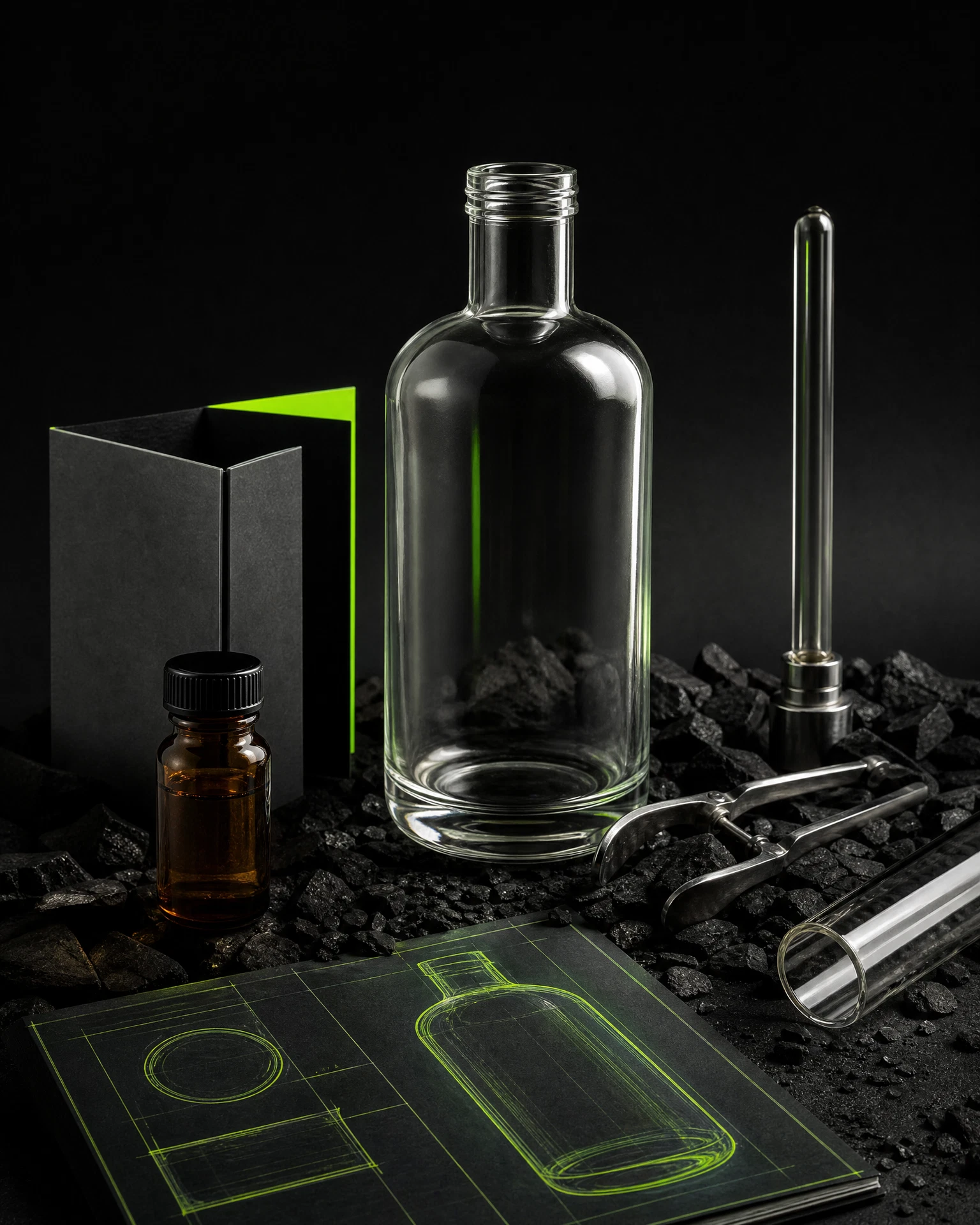
One of the first and most consequential decisions you will make when creating a drinks brand is whether to source an existing product (private label or white label) or develop your own recipe and production process. Both routes have succeeded at the highest levels of the industry — and both have failed spectacularly when chosen for the wrong reasons. This guide gives you the honest comparison.
What Is Private Label (White Label)?Private label means sourcing an existing product from a producer — a winery, distillery, brewery, or soft drink manufacturer — and applying your own brand to it. The product already exists; you are adding the brand layer. This is how the majority of new drinks brands start, and it is how many of the world's most successful brands operate permanently. Grey Goose vodka was famously created as a marketing concept before a drop was produced. Many premium supermarket own-label wines are private label products from prestigious producers.
The advantages of private label are significant. Speed: you can go from concept to first bottle in 8–16 weeks. Cost: no production infrastructure investment required. Risk: you are not betting on a recipe that consumers may not like. Flexibility: you can change producers, adjust the blend, or pivot the product more easily than if you own production. Quality: established producers have decades of expertise — your product quality is often higher than you could achieve with own production at the same price point.
The disadvantages are real but manageable. Differentiation: if your competitor is using the same producer, your products may be similar at the liquid level. Dependency: you are reliant on your producer's quality, availability, and pricing. Authenticity: some consumers and trade buyers value own-production stories — though this matters far less than most brand builders assume.
What Is Own Production?Own production means developing your own recipe, sourcing your own raw materials, and either producing the product yourself or commissioning a contract manufacturer to produce it to your specification. This is the route taken by craft spirits brands, artisan winemakers, and innovative soft drink companies.
The advantages of own production are compelling for the right brand. Differentiation: a genuinely unique recipe is a defensible competitive advantage. Story: the production story — the distillery, the vineyard, the brewing process — is powerful brand content. Control: you control every aspect of the product. Margin: over time, own production can deliver better margins than private label.
The disadvantages are equally significant. Time: developing a recipe, finding a production partner, and completing the first production run takes 12–24 months minimum. Cost: recipe development, production trials, and minimum order quantities represent a significant upfront investment. Risk: consumers may not respond to your recipe. Complexity: managing production adds significant operational complexity.
The Decision FrameworkThe right choice depends on four factors. First, your timeline: if you need to be in market within 12 months, private label is the only viable route. Second, your budget: if your launch budget is under €100,000, private label is almost certainly the right choice. Third, your differentiation strategy: if your brand's point of difference is the product itself (a unique recipe, a proprietary production method, a specific terroir), own production may be necessary. If your differentiation is the brand story, the design, the target consumer, or the distribution channel, private label is entirely sufficient. Fourth, your category: in some categories (Champagne, Cognac, Scotch whisky), the production story is integral to the category's value proposition. In others (vodka, gin, many RTDs), the brand layer matters far more than the production story.
The Hybrid RouteMany successful brands start with private label and transition to own production as they scale. This approach — launch fast, validate demand, then invest in production — is lower risk and allows you to build the brand before committing to production infrastructure. Cashcane Rum started with a carefully selected Caribbean blend before developing its own proprietary production process as the brand scaled to 25 countries.
Our RecommendationFor most new brands, private label is the right starting point. The brand — the story, the identity, the positioning, the distribution — creates far more value than the production process. Invest your resources in building an exceptional brand, not in production infrastructure you do not yet need. If your brand succeeds and the production story becomes important to your competitive position, you can always invest in own production later. The reverse — investing in production before you have validated the brand — is a far more expensive mistake.
At The Brand Atelier, we have built brands both ways. Our 10-week brand creation process is optimised for the private label route — we have established relationships with world-class producers in Champagne, Bordeaux, Burgundy, the Caribbean, Scotland, and beyond. But we also have the expertise to guide own-production projects when the brand concept demands it.
Published 2026-06-03 — The Brand Atelier